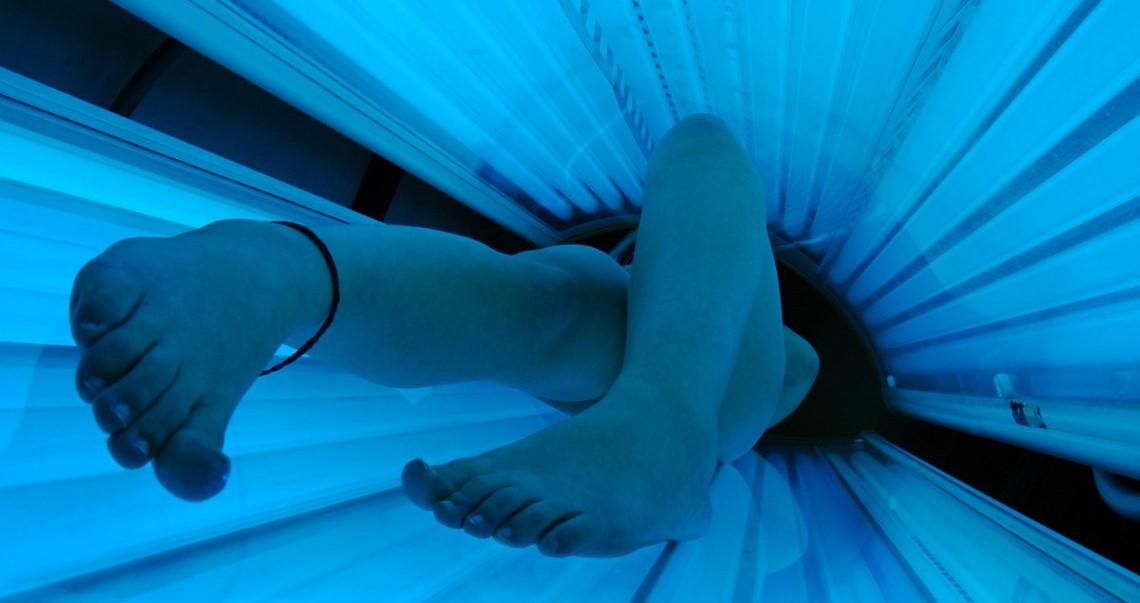
At Apollo Dermatology, we understand the appeal of a tan. It can feel like a quick way to look healthy, lift your mood during a long Michigan winter, or get ready for a vacation or a big event. We are not here to judge. We are here to share what we see every day in our clinic, and to ask you, gently but clearly, to stay away from tanning beds.
A tan is a sign of damage
There is no such thing as a safe tan. When your skin darkens, it is responding to injury. Ultraviolet (UV) light damages the DNA inside your skin cells, and your body produces extra pigment to try to protect itself. That damage adds up over time, and some of it cannot be undone.
Tanning beds deliver concentrated UV light, often much stronger than the midday sun. The World Health Organization places tanning beds in its highest cancer risk category, the same group as tobacco.
The risk is real, especially for young people
Research consistently shows that people who start using tanning beds before age 35 raise their risk of melanoma, the deadliest form of skin cancer, by about 75 percent. Indoor tanning also raises the risk of basal cell and squamous cell carcinoma, the two most common skin cancers.
We treat skin cancer every week, including in patients in their twenties and thirties. Many of them tell us they wish someone had been more direct with them about tanning when they were younger. Consider this our way of being direct with you.
It also ages your skin
Beyond cancer, UV exposure is the leading cause of early skin aging. Wrinkles, leathery texture, uneven color, and sunspots are largely driven by UV damage. If you care about how your skin looks in ten or twenty years, avoiding tanning beds is one of the most effective things you can do.
Healthier ways to get a glow
If you love the look of a tan, there are safe options:
- Sunless tanning lotions, mousses, and sprays
- Professional spray tans
- Bronzers and tinted moisturizers
These give you color without the UV damage. Just remember that a sunless tan does not protect you from the sun, so you still need sunscreen outdoors.
Protect the skin you have
- Use a broad spectrum sunscreen with SPF 30 or higher every day, even when it is cloudy
- Reapply every two hours outdoors, and after swimming or sweating
- Wear hats, sunglasses, and protective clothing
- Seek shade between 10 a.m. and 4 p.m., when UV rays are strongest
- Check your own skin each month for new spots or changes
Book your yearly skin cancer screening
Even with the best habits, skin cancer can still develop, especially if you have used tanning beds in the past, have a history of sunburns, or have a family history of skin cancer. The good news is that when skin cancer is found early, it is highly treatable.
We recommend a full body skin exam with a dermatologist once a year. The visit is quick, painless, and could truly save your life. We will look for anything concerning, answer your questions, and help you build a plan to protect your skin going forward.
To schedule your yearly skin cancer screening, call Apollo Dermatology at (248)-436-4888 or visit us at 555 Barclay Circle in Rochester Hills. If you notice a spot that is new, changing, bleeding, or simply does not look right, please do not wait for your yearly visit. Call us sooner.
Your skin is with you for life. Let’s take care of it together.
Arjun Dupati, MD, FAAD
Apollo Dermatology
Call us at 248-436-4888 to schedule an appointment with Dr. Arjun Dupati.
📞 Call Apollo Dermatology at 248-436-4888.
🌐 Request an Appointment
📍 Apollo Dermatology | Rochester HIlls, Michigan
By Dr. Arjun Dupati, Board-Certified Dermatologist and Fellowship-Trained Mohs Surgeon